Venice, FL, Oct. 12, 2026 (GLOBE NEWSWIRE) -- Plumbing Detectives LLC Publishes Sewer Camera Inspection Checklist to Help Homebuyers Before Closing
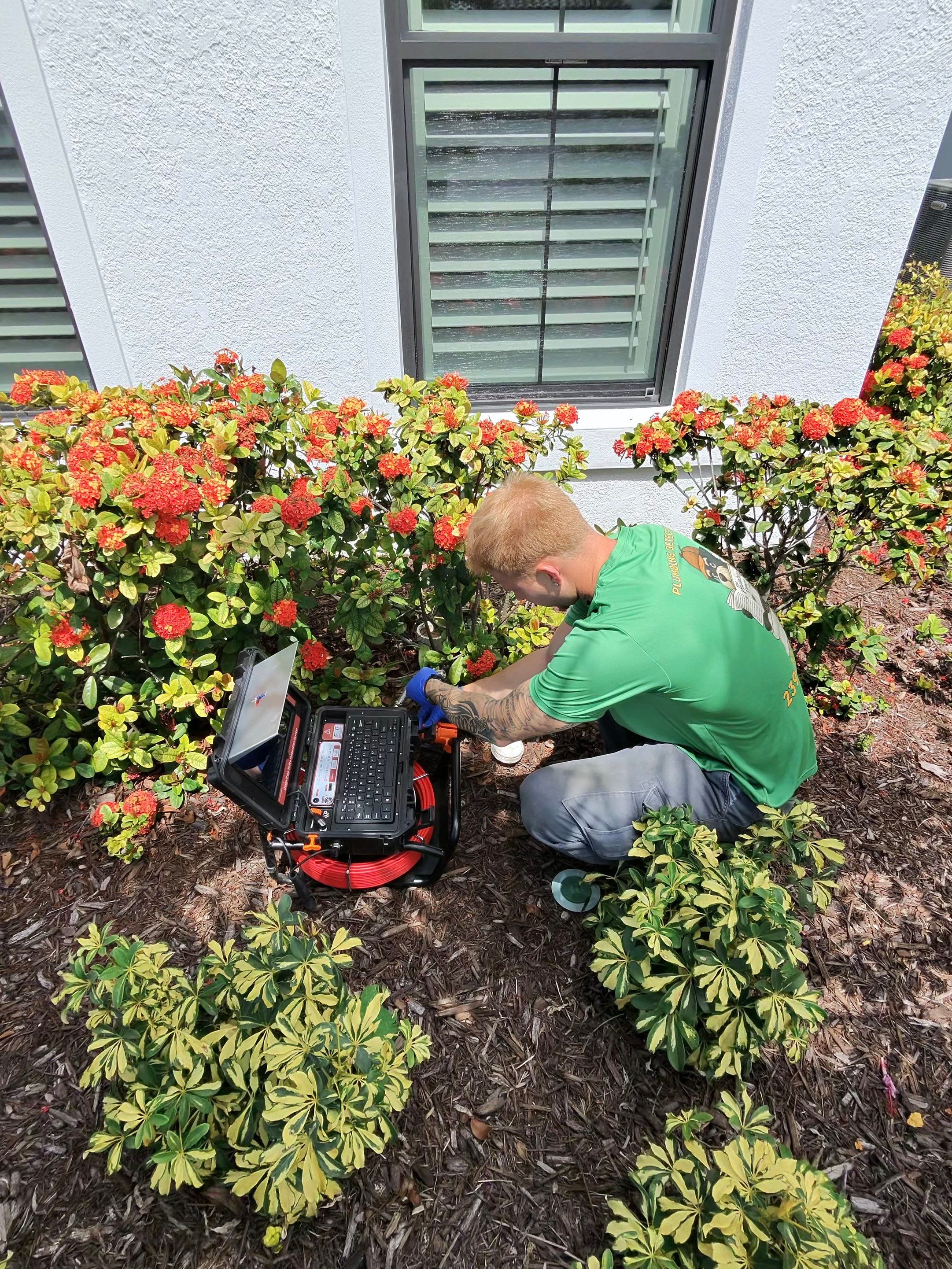
A Plumbing Detectives LLC technician runs a sewer camera through an exterior cleanout at a Venice-area home, watching the live feed on the monitor.
Venice plumbing contractor says neither a standard home inspection nor a typical sewer scope is required to examine the cast-iron drain line under a slab home — and releases six questions every buyer should ask before closing
Plumbing Detectives LLC, a licensed plumbing contractor serving Venice and surrounding Sarasota County communities, has published a six-question checklist for homebuyers after repeatedly meeting new owners of older Venice homes who believed their sewer line had been inspected before closing when, in practice, no one had looked inside it.
The checklist accompanies a new article by owner Michael Reynolds, a Florida Certified Plumbing Contractor, that explains two limitations most buyers never hear about: what a Florida home inspection is required to cover, and what a separately purchased sewer-scope inspection may still leave out.
Why a "Passed" Home Inspection Does Not Mean the Sewer Line Was Examined
Florida law defines home inspection services as a limited visual examination of a home's readily accessible installed systems, including plumbing. The state's standard of practice for the plumbing system directs inspectors to examine visible and readily accessible plumbing components. Neither the statute nor the rule requires an internal sewer-camera inspection as part of a standard home inspection.
"This isn't a criticism of home inspectors — they're doing what the standard asks," Reynolds said. "The problem is that a buyer hears 'the house passed inspection' and assumes that covers the drain line under the slab. It doesn't, and nobody tells them that until I'm standing in their hallway with a camera a few months after they moved in."
The Second Gap: A Sewer Scope May Not Include the Pipe Under the Slab
Buyers who know to order a separate sewer-scope inspection on an older home encounter a second limitation. InterNACHI, a professional home-inspector association, publishes a standard of practice for sewer scopes that describes the inspection as covering the main or exterior lateral sewer line from a cleanout or roof vent — the run out toward the street, HOA connection, or septic tank — and states that the inspector is not required to scope or inspect underfloor or in-house portions of the building drain or sewer system. The same standard allows the client and inspector to modify the scope before the inspection.
For a slab home built in the 1960s, 1970s, or 1980s, the underfloor section is typically the original cast iron. Under that standard, it can fall outside the scope of the sewer inspection a buyer paid for unless the buyer specifically requested it and the inspector could physically reach it.
"That's one association's standard, not Florida law, and some inspectors go further," Reynolds said. "But the buyer has to ask. Most don't know to."
What the Company Found in a 1980 Venice Home
The article describes an April 2026 service call in a block-on-slab Venice home built in 1980. The homeowner's toilets gurgled whenever the washing machine ran. Reynolds ran a camera from the back of the house and reached roughly fifteen feet before determining the line had to be opened.
The drain line was the home's original cast iron — forty-six years old, below the 50-to-60-year service-life guideline InterNACHI publishes for below-ground cast iron. The bottom of the pipe was packed with black deposits, and a cut-out section crumbled when handled. Fittings had collapsed and cracked. Roughly three-quarters of the home's interior drain piping was replaced; work stopped before the master bath because that section appeared to be in good condition.
"I don't replace pipe because of its age. I replace what's actually bad," Reynolds said. "I can tell you what I saw in that house — heavy scale, a pipe that had lost the metal that gave it strength, fittings that had let go. I can't tell you from a photo exactly which corrosion process did it; that takes a lab. And one house isn't a statistic. But it looked fine from the outside, and a standard visual inspection would not have shown the inside of that concealed pipe."
The Six Questions to Ask Before Closing on an Older Venice Home
The checklist, published in full on the company's website, gives buyers six questions to put to a home inspector or sewer-scope provider before closing:
1. Did anyone actually run a camera in this drain line — or is the report based on the home's age and area?
2. If a sewer scope was done, did it include the pipe under the slab, or only the run from the cleanout out to the street?
3. What access point was used, and where did the camera stop?
4. Which sections are cast iron, and which are PVC or something else?
5. Which sections couldn't be seen, and why?
6. Do I get the recording and a written summary — and what do the findings mean?
"If the answer to several of those is 'I don't know,' that isn't a failed inspection," Reynolds said. "It's a gap you can close before you close on the house."
What a Sewer Camera Inspection Can and Cannot Establish
The article is equally direct about the limits of the company's own service. A camera inspection documents the visible interior of the sections it reaches. It does not measure remaining pipe-wall thickness, and a clean run through the sections that could be seen does not establish the condition of sections that could not. Standing water in a low spot, heavy deposits, offsets, and lack of access can all stop a camera.
Reynolds describes how each inspection is run: the homeowner watches the screen with him; where the camera finds a belly or break or cannot continue, he explains what can be seen and what remains unknown; opening the floor to reach that section is a separate repair step the homeowner authorizes; and once the line is open, the camera is run in both directions from the opening, with any decision to continue made together.
"I can't honestly tell you what I can't see, and neither can anyone else," Reynolds said. "Any inspection report that doesn't say which sections it couldn't reach is leaving something out. You should hear that from whoever inspects your line."
When Buyers and Owners Should Consider a Camera Inspection
According to the article, a camera inspection is worth considering when:
- A buyer is purchasing a slab home built before the mid-1980s and no one has confirmed a camera was run inside the drain line.
- A sewer-scope report does not state whether the underfloor section was included, or which sections could not be reached.
- Toilets gurgle when another fixture, such as a washing machine, is running.
- Drains are slow and keep coming back after being cleared.
- There are wet spots, soft flooring, or an odor with no obvious source.
- A remodel will open the floor — the time to evaluate or replace original cast iron while access is already there.
For owners of 1970s- and 1980s-era cast iron with no symptoms, Reynolds' advice in the article is plain: the pipe can be lived with, but it will eventually need replacement, and any planned remodeling is the practical moment to address it.
Learn More
The full article and checklist, "Buying an Older Home in Venice? Ask Whether the Sewer Inspection Includes the Pipes Under the Slab," is available at https://plumbingdetectivesfl.com/sewer-inspection-before-closing-venice-fl
Plumbing Detectives LLC offers sewer camera inspection and locating for homeowners and buyers in Venice and surrounding communities. The company documents the sections reached and identifies the sections that could not be viewed.
About Plumbing Detectives LLC
Plumbing Detectives LLC is a Venice, Florida plumbing company specializing in sewer line camera inspections, sewer line repair, and residential plumbing service. Owner Michael Reynolds is a Florida Certified Plumbing Contractor with 20+ years of field experience, including large-scale infrastructure work in New York City before relocating to Venice. The company focuses on accurate diagnostics, clear communication, and dependable workmanship. Florida Certified Plumbing Contractor License CFC1434139. Serving Venice, Nokomis, Sarasota, Laurel, Englewood, and surrounding areas.
Media Contact:
Michael Reynolds
Owner, Plumbing Detectives LLC
(239) 388-3631
mike@plumbingdetectivesfl.com
https://plumbingdetectivesfl.com
Press Inquiries
Michael Reynolds
mike [at] plumbingdetectivesfl.com
2393883631
https://plumbingdetectivesfl.com
312 E Venice Ave