New Avast research supporting Gen's mission to create a Fearless Planet reveals an "AI confidence trap"
56% of adults worldwide say they're sure they'd catch an AI fake while more than half considered or already shared sensitive information with a chatbot
TEMPE, Ariz. and PRAGUE, Sept. 22, 2026 /PRNewswire/ -- Spotting a fake and guarding your own data are very different habits, and that gap sits at the center of the newly released Avast 2026 Safe Tech Report. Avast, a leader in digital security and privacy, commissioned the study to understand how people are navigating trust, privacy, and AI in everyday life. Avast is part of Gen (NASDAQ: GEN), and these insights support the Company's mission to build a Fearless Planet.
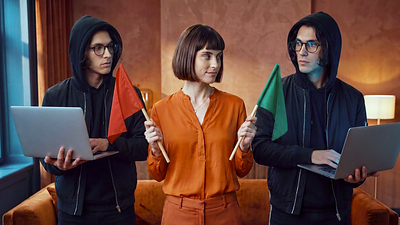
The report found that 56% of adults worldwide are convinced they'd catch an AI fake the moment they saw one. Yet 52% have shared, or considered sharing, at least one sensitive item with an AI tool.
"Being confident you'd spot an AI fake and knowing when and how to protect your data are two different skills. However, confidence in one can convince people they're safe with the other, and that's the trap," said Richard Watts, Head of Avast. "Chatbots aren't confidants. Check what a tool does with your data before you share anything and remember that tool is yet another place your information could be exposed. If you wouldn't want it repeated to a stranger, don't hand it over to the bots."
Being Sure Isn't the Same as Being Safe
Just over half of global adults (56%) say they'd spot an AI fake without blinking. The latest Gen Threat Report put that confidence to the test: the report found AI was involved in tens of millions of video encounters worldwide in the first half of 2026, and roughly 1 in 30 of them was flagged as a scam; this shows that these fakes are convincing enough to slip past the very confidence people are relying on to catch them.
"What we see in the threat landscape reinforces what consumers are telling us here: spotting that something was made with AI is only part of the challenge," said Michal Salat, Threat Intelligence Director for Gen Threat Labs. "Through our Fearless Planet Index, we see how scams are evolving in the real world, and AI is increasingly making the first impression more convincing. But underneath, attackers are still pulling the same psychological levers – urgency, trust, fear and the promise of something too good to pass up. The technology may be changing, but the human behaviors scammers exploit remain remarkably consistent."
That same self-assurance is lowering people's guard elsewhere, including the workplace:
- 20% of adults have shared, or considered sharing, a CV with an AI chatbot
- 20% have done the same with a work document, treating it as a one-off exchange
But the bigger risk in 2026 isn't a one-time leak. It's that AI tools remember. A CV or a work document shared today can sit in a system's memory long after the conversation ends, where it could be exposed in a future data breach, surface in someone else's chat, or folded into training data, all without the person's knowledge.
Knowing Better Isn't the Same as Doing Better
People know the classic red flags; they just talk themselves past them. The report found the easiest warning signs adults shrug off in the moment, include:
- An offer that looks too good (42%)
- A request for personal details to "verify" identity (39%)
- Pressure to act fast (37%)
Real world scam data backs this up: research from Gen Threat Labs into fake celebrity videos and AI-generated scam content found a similar pattern: the realistic face or voice is just the wrapping, while the too-good offer, the urgency, and the request to "verify" personal details are what's doing the persuading. The very red flags people take least seriously are also the ones today's AI scams rely on most to succeed.
Knowledge That Stays Put
People also tend to handle suspicious activity alone. When something odd lands — a message, a call, a DM:
- 41% delete it and say nothing
- 20% look into it by themselves
The same instinct limits how far people's own scam education travels. 86% of adults worldwide watch or listen to true-crime-style scam content, and it's changing how they think: 57% say it makes them more alert day to day, and 53% say it makes them more suspicious of messages and offers. Yet of the same 86%, just under half (46%) have used it to start a conversation with a friend, partner, or family member. Awareness is spreading; passing it on to others isn't keeping pace.
This doesn't mean people are careless. Adults today are more switched on about digital threats than any generation before. The gap isn't what people know; it's how that knowledge gets used. A dismissed red flag can be the whole con, and a scam story kept to yourself protects no one else.
Three Habits to Close the AI Confidence Trap
- Share less by default
- Question the pressure to act fast as closely as you question whether something is real
- Share what you know with friends and family so you can help them be safer, too
These are habits anyone can build. Avast One helps to give people the confidence to know what's real and stay in control of what they share, so trust doesn't have to come at the cost of safety.
To get more advice on staying safe from AI threats, scams, and how to protect your personal information online, check out the 2026 Avast Safe Tech Report today. This report is just one of the many ways Gen is raising awareness of the threats people are facing today. You can learn more about these insights and others at the Gen Fearless Planet Index.
About Avast Safe Tech Report
The study was conducted online across 12 markets (the United States, United Kingdom, Brazil, Colombia, Chile, France, Germany, Australia, New Zealand, Czech Republic, Japan, and Mexico) from 22 May to 19 June 2026, among 13,003 adults aged 18+. Data are weighted by age, gender, and region to be nationally representative.
About Avast
Avast is a leader in digital security and privacy, and part of Gen (NASDAQ: GEN), a global company dedicated to powering Digital Freedom with a family of trusted consumer brands. Avast protects hundreds of millions of users from online threats, for Mobile, PC or Mac, and is top-ranked and certified by VB100, AV-Comparatives, AV-Test, SE Labs and others. Avast is a member of the Coalition Against Stalkerware, No More Ransom and Internet Watch Foundation. Learn more at Avast.com.
About the Gen Threat Labs
Gen Threat Labs is the Cyber Safety research team within Gen, focused on uncovering and analyzing the latest digital threats and scams worldwide. Rooted in data, research and technical expertise, the team identifies patterns and risks that shape the evolving cyber landscape. Its insights power the security technologies that protect people across Gen's portfolio of trusted brands, including Norton, Avast, LifeLock and others, as well as the Fearless Planet Index, an interactive resource that helps people understand emerging digital risks around the world.
Mike Healey | Amandeep Turna |
Gen | Delphi for Gen |

 View original content to download multimedia:https://www.prnewswire.com/news-releases/avast-safe-tech-report-reveals-overconfidence-in-spotting-deepfakes-and-comfort-in-sharing-personal-data-with-bots-302885334.html
SOURCE Avast
