Santa Ana, CALIFORNIA, Sept. 15, 2026 (GLOBE NEWSWIRE) -- DuctPro Systems LLC, a provider of professional air duct cleaning equipment, today released equipment-selection guidance for HVAC and carpet cleaning contractors considering the addition of air duct cleaning services. The guidance outlines how established contractors can evaluate their existing customer relationships, technicians, vehicles, scheduling systems, and sales processes when assessing a duct-cleaning operation. It also emphasizes evaluating equipment as part of a complete field workflow, including system access, negative-pressure extraction, agitation, hose routing, containment, filtration, and debris collection. The guidance uses DuctPro Systems’ Tri-Motor Vacuum as a practical equipment example, with specifications including 330 CFM, 900 Air Watts, 220 inches of water lift, three independently controlled vacuum motors, 120-volt operation, and a 12-gallon debris capacity.
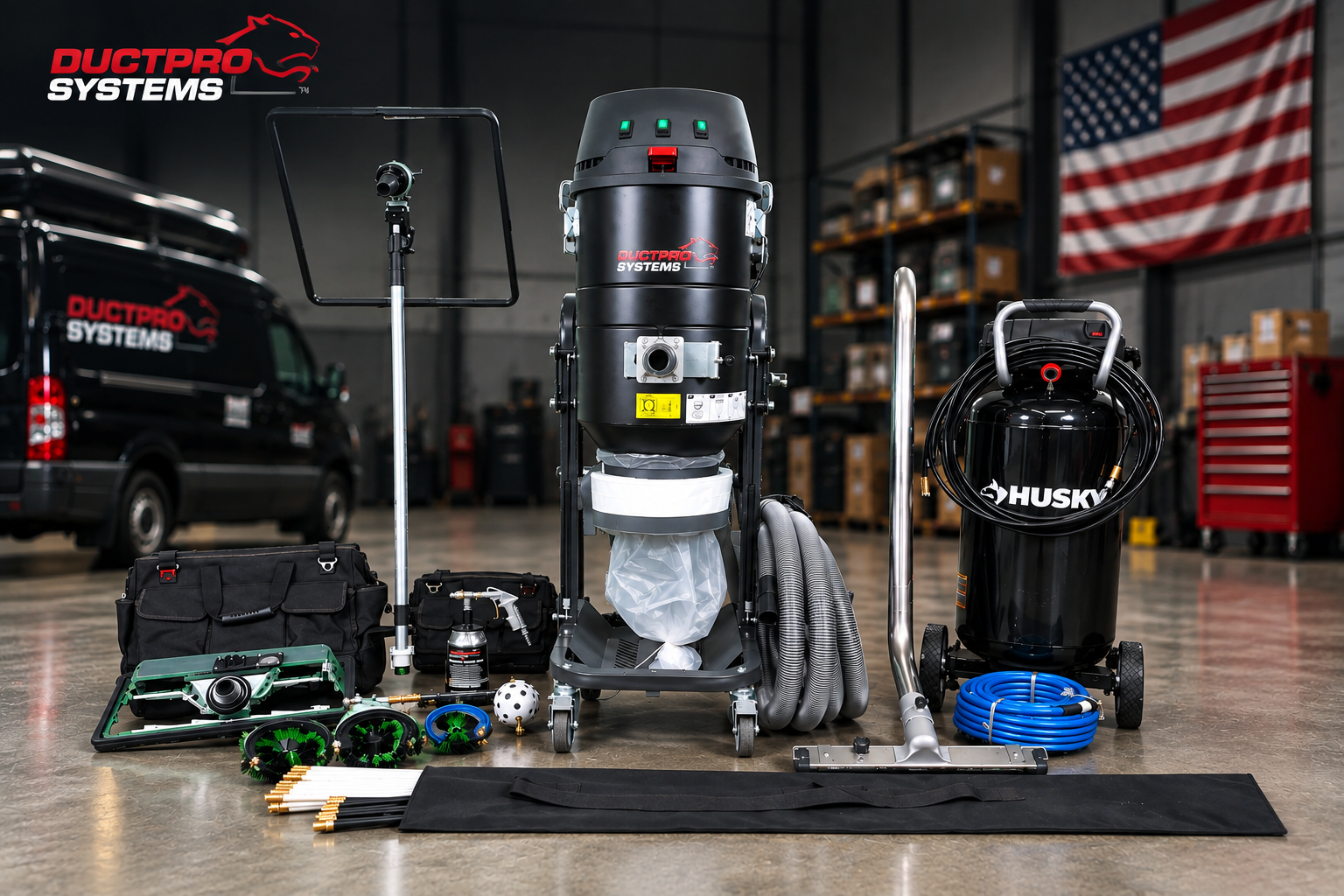
DuctPro Systems professional air duct cleaning equipment for HVAC and carpet cleaning contractors expanding their service offerings.
Adding a service is different from starting a business. An established contractor may already possess several operational foundations. The question is whether duct cleaning fits the company's customers, workforce, vehicles, procedures, and strategy.
For more information about DuctPro Systems, visit DuctProSystems. The company's homepage is also available at https://ductprosystems.com/.
For HVAC Contractors, the Opportunity May Begin With the Existing Customer Base
Many established HVAC businesses already have technicians visiting homes, offices, multifamily properties or commercial facilities. Some also have experience working around air-handling systems and communicating with property owners about service and maintenance.
For an HVAC company that already has technicians, suitable vehicles, customer relationships, dispatch infrastructure, experience working inside occupied properties, sales processes, a local reputation or recurring service relationships, the business may already possess several foundations relevant to an additional field service.
That does not mean every HVAC contractor should add duct cleaning. The fit depends on market, technicians, customer demand, vehicle capacity and intended scope of work.
Purchasing a vacuum is not enough. A professional duct-cleaning operation requires a workflow in which system access, negative-pressure extraction, agitation, hose routing, containment, filtration, debris collection and technician procedures work together.
A contractor considering adding air duct cleaning to an HVAC business can begin with the service model rather than a catalog. The intended work should determine the equipment configuration.
Carpet Cleaning Companies May Have a Different Starting Point
Carpet cleaning businesses can approach the same opportunity from another direction. Many already operate mobile service businesses in which technicians travel to residential and commercial properties, perform cleaning work on site and manage equipment from a service vehicle.
They may also have established relationships with homeowners, property managers and commercial customers. For some companies, that operating model makes duct cleaning worth investigating.
Some carpet cleaning companies may already own equipment that contributes to their broader operation. Others may need equipment specifically suited to duct cleaning. Vehicle dimensions, expected job volume and the types of duct systems encountered can affect the appropriate configuration.
The useful question is not, "What is the biggest machine available?"
It is, "What equipment configuration fits the work we actually intend to perform?"
Companies evaluating adding air duct cleaning to a carpet cleaning business can use that distinction to assess equipment as part of the service rather than as an isolated purchase.
The Advantage May Already Be Inside the Existing Operation
An HVAC company may already have technicians entering buildings. A carpet cleaning company may already have technicians entering homes. The customer relationship, vehicle, scheduling process, or sales process may already exist.
What changes is the service capability.
Creating a new business requires building customers, processes, staffing, and market awareness. Adding an adjacent service means examining whether existing resources can support another offering without assuming every resource is automatically suitable.
Duct cleaning falls into that second category for some contractors. Demand can be evaluated using customer profiles, service territories, technician capabilities, vehicle capacity, scheduling patterns and property types already being served.
Buying a Vacuum Is Not the Same as Building the Service
A duct-cleaning system operates within a larger field workflow. Contractors may need to evaluate:
- Type of duct-cleaning work
- Residential versus commercial applications
- Expected job volume
- Duct-system configuration
- Access requirements
- Negative-pressure extraction
- Hose diameter and length
- Hose routing
- Agitation
- Filtration
- Debris collection
- Vehicle capacity
- Portability
- Maintenance
- Replacement parts
- Technical information
- Component compatibility
- Future expansion
A specification describes a machine. A job requires an operating system.
CFM describes airflow rate. Water lift describes vacuum pressure capability. They are different characteristics and should not be treated as interchangeable.
Actual extraction conditions can be influenced by hose length, hose diameter, filters, duct restrictions, connections, duct configuration, debris, and the complete airflow path.
A CFM figure on a specification sheet does not automatically describe airflow available at the end of a long hose connected to a real duct system. Similarly, water lift should be considered as part of the overall extraction system.
Higher CFM does not automatically mean better duct cleaning.
DuctPro's Tri-Motor Vacuum as a Concrete Example
DuctPro Systems' Tri-Motor Vacuum provides a specific example of why equipment specifications should be read in context.
Its confirmed specifications are:
- 330 CFM airflow rate
- 900 Air Watts
- 220 inches of water lift
- 120 Volts
- Three independent vacuum motors
- 12-gallon debris capacity
The 330 CFM figure identifies the airflow rate. The 220-inch water-lift specification identifies vacuum pressure capability. Three independent vacuum motors describe the motor configuration, while 12 gallons describes debris capacity.
These figures do not guarantee field performance. Actual extraction depends on the complete setup and application, including hoses, connections, filters, restrictions, and duct configuration.
Basic Configuration or More Complete Capability?
A carpet cleaning company with compatible equipment already in its fleet may have a different starting point from a company building duct-cleaning capability from the beginning. An HVAC contractor may have different requirements based on its vehicles, technicians, and target customers.
Before purchasing, an owner can ask:
- What equipment do we already own?
- What can realistically be reused?
- Which equipment is specialized for duct cleaning?
- What will our first jobs look like?
- What systems do we expect to encounter?
- How much equipment can our vehicles accommodate?
- What capabilities will we need six months from now?
- What might we need 12 months from now?
- What equipment could we outgrow too quickly?
- What capability would we rarely use?
The appropriate purchase is not necessarily the largest configuration or the least expensive machine. It is the configuration that fits the company's intended work and development path.
Equipment Is an Investment in Capability
Professional equipment influences what a service business can realistically do in the field. It affects which jobs a company can pursue, how technicians organize work, how equipment moves between locations, how extraction is performed and how debris is collected and transported.
That does not make equipment a guarantee of revenue, profitability, or return on investment. Those outcomes depend on market demand, pricing, sales execution, labor, operating costs, and the company's ability to deliver the service.
A more defensible way to view the purchase is as an investment in capability.
The Ownership Decision Extends Beyond the Initial Price
Sophisticated buyers also look beyond the purchase price. A contractor evaluating professional equipment may want to understand:
- Parts and replacement requirements
- Maintenance needs
- Accessories and consumables
- Technical information
- Component compatibility
- Equipment support
- Long-term usability
- Vehicle requirements
- Expansion possibilities
Why DuctPro Systems Belongs on the Evaluation List
DuctPro Systems focuses on professional air duct cleaning equipment, giving contractors options to evaluate according to their intended work, existing resources, and service goals. Once duct cleaning fits the business, the next step is selecting equipment that supports the workflow and future service needs.
That becomes relevant when the question changes from "Should we add duct cleaning?" to "What would it take to execute the service professionally?"
A generic equipment purchase addresses a purchasing need. A properly considered configuration addresses an operating requirement.
Contractors at the equipment-evaluation stage can review DuctPro's professional equipment shop to examine available options in the context of their intended applications.
From Service Expansion to Equipment Selection
For an established HVAC or carpet cleaning company, the first decision does not have to be whether to become a duct-cleaning company. It can be a narrower question: Does air duct cleaning make sense as an additional service within the business we already operate?
That question can be evaluated against existing customers, technicians, vehicles, service territories, scheduling systems, and sales processes.
If the answer appears promising, the next question is operational: What equipment and procedures would be required to perform the work appropriately?
The opportunity is not simply to buy another machine. It is to determine whether air duct cleaning belongs in the existing business, understand what professional execution requires, and select equipment that matches the work.
For contractors who reach that point, DuctPro Systems offers a specialized equipment resource for evaluating the practical requirements of professional duct-cleaning work. The company's equipment options give HVAC and carpet cleaning businesses a starting point for considering how a new duct-cleaning capability could fit within their existing operation.
About DuctPro Systems
DuctPro Systems LLC provides professional air duct cleaning equipment for contractors and businesses evaluating or developing duct-cleaning service capabilities. The company's equipment offering is designed around the practical requirements of professional duct-cleaning applications, giving businesses equipment options they can evaluate according to their work, operating model, and service goals.
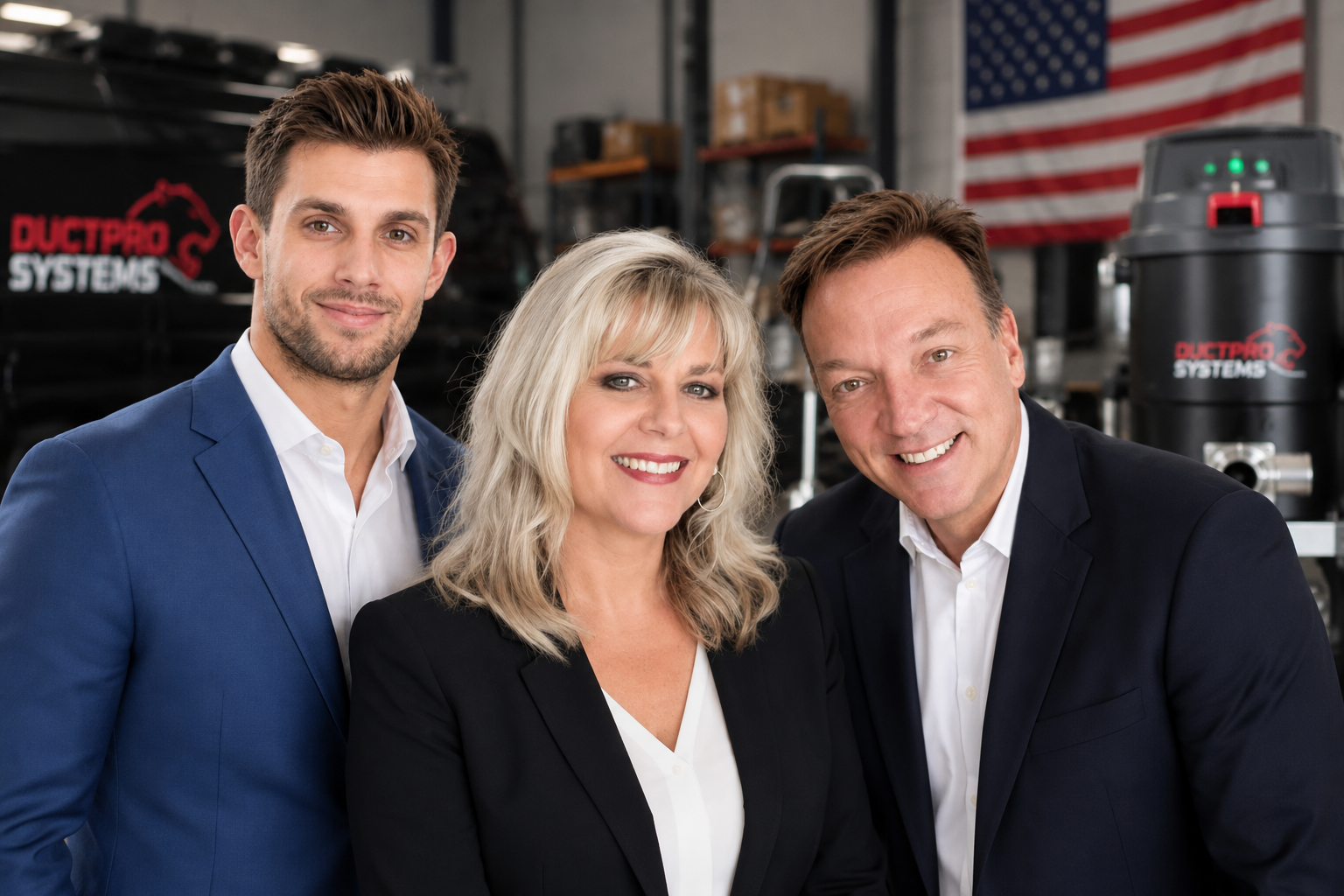
DuctPro Systems leadership team in the company’s professional equipment and operations environment.
Press Inquiries
Jeff Bryant
jeff [at] ductprosystems.com
(714) 475-1333
https://ductprosystems.com/
1510 East Edinger Ave. Suite D, Santa Ana, CA 92705
A video accompanying this announcement is available here: https://youtube.com/watch?v=lwsp92FYTL8