- The core issue is not that AI performs poorly, but that most prompts prioritise the perfect aggregation of sights over lived experiences aligned with the traveller’s real style and tastes.
- Hyper-specification is frequently poorly documented: activities requested in the wrong season, monuments that are closed, or sunsets timed impossibly on short winter days.
- Many clients arrive with polished lists that look complete but obscure the human details that actually matter.
- Proactive collaboration with origin-market travel consultants and the ability to turn inspiration into viable private journeys have become more decisive than ever
Madrid, MADRID, Aug. 25, 2026 (GLOBE NEWSWIRE) -- Private Tours of Spain (privatetoursofspain.com), the boutique Madrid-based operator and DMC specialising in fully private, chauffeured journeys across Spain, Portugal and Southern France, is observing a clear industry-wide shift. The company has recorded a 400% increase in hyper-specific AI-generated private tour requests. The widespread use of artificial intelligence is changing the way international travellers request custom private tours — a phenomenon confirmed in conversations with colleagues and partners operating in France, Portugal and other European markets.
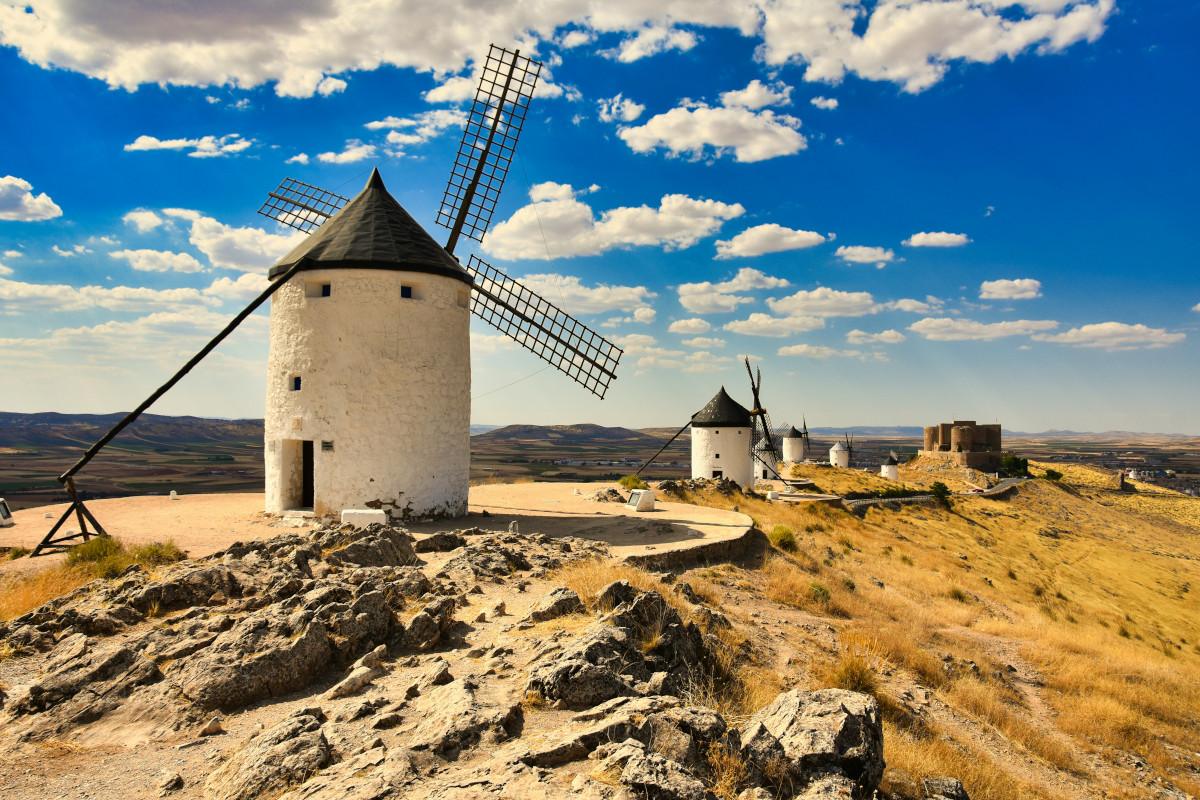
The wind mills in Consuegra during a Private holiday in Spain
The 2026 season has accelerated a change already visible in previous years. What once took internet search engines years to alter is now happening much faster with generative AI. Specialised private-tour operators and DMCs across countries are receiving requests with a distinctly different profile.
Private Tours of Spain identifies several relevant changes that appear consistent across the industry:
1. Highly polished “perfect” itineraries that prioritise sights over lived experiences
Many clients now delegate the first phase of research to AI tools. The result is detailed day-by-day plans, complete with timings, restaurant recommendations and must-see lists. These documents often look professional and well-researched. Yet they frequently treat a private journey as an aggregation of places to be ticked off rather than a sequence of experiences shaped around the traveller’s actual pace, interests, energy levels and personal style.
A recent real example received by the company: a request for a six-day private tour combining Barcelona, Rioja, San Sebastián, Bilbao, Madrid, Toledo, Seville and Granada, three Michelin-starred dinners, a private flamenco performance and an evening visit to the Alhambra — all with a private driver and guide. The itinerary was elegant on paper. In practice it ignored realistic driving times, the physical rhythm of multi-day private travel, and the simple fact that true exclusivity and depth require breathing space.
As Olivia Núñez, of Private Tours of Spain, explains:
“The AI is not failing. It is doing exactly what it is asked to do — optimise a list of highlights. The problem sits in the prompt. Most people ask for the perfect collection of things to see, rather than for a journey that reflects how they actually like to travel, what they value in a day, and what kind of memories they want to keep. That is where the human expert still makes the decisive difference.”
2. Hyper-specification that is often poorly documented and collides with reality
Clients arrive with very precise wish lists. In many cases these lists are difficult or impossible to fulfil within a private-chauffeured format. Moreover, the hyper-specification is frequently not grounded in accurate information: activities are requested in the wrong month, monuments that are closed on the proposed day, or sunsets timed for hours that become impossible once the preceding programme is followed — especially on short winter days. Operators in several countries report similar patterns; some requests also show characteristics consistent with automated systems or AI agents gathering data.
3. List-style briefs that look complete but often obscure what actually matters — and the risk of clients never engaging with the proposal
Travellers now frequently open the conversation with lengthy AI-generated briefs written in polished English. These documents create the impression of thoroughness. In reality, the list format rarely provides more useful information than a shorter, more human insight into the traveller. Important underlying details — real energy levels, genuine preferences, physical limitations or the kind of day the client actually enjoys — can easily be overlooked or never stated.
A single clear sentence such as “We are 85 years old, we can still walk and we are very curious, but our walking pace is limited” once conveyed far more relevant information for designing a successful private journey than an enormous minute-by-minute schedule.
The real operational risk is that some clients, having delegated the initial research to AI, may also disengage from the subsequent dialogue. They hand over the list and do not fully read or respond to the carefully prepared proposal that follows. In a product as personal as a private tour, this lack of engagement makes it harder to refine the journey and deliver the experience the traveller would ultimately value most.
4. Higher volume of similar-looking enquiries and more detailed price challenges
The ease of generating and sending requests has increased the overall volume across the sector. Many arrive with almost identical structures. After the first proposal, clients often return with price analyses that appear based on averages and rarely account for service quality, seasonality or the real cost of a fully private vehicle and expert guide.
Exquisite handling of requests and proactive collaboration with consultants
In this new landscape, the role of the professional who truly knows the product becomes more important, not less. As a tour operator and DMC, Private Tours of Spain places particular emphasis on giving every request careful, high-quality attention and on working proactively with expert travel consultants in the clients’ countries of origin. These professionals have often worked with the same travellers for years. They understand their real tastes, energy levels, preferences and constraints. Together we develop a shared language of expectations that is perfectly calibrated to the individual client — something that sits far removed from simple wish lists generated by a prompt.
“One of the approaches we take is to protect deep local knowledge for internal use and to nurture these long-term relationships with origin-market specialists,” says Núñez. “A few years ago it made sense to publish a great deal of detailed information for search visibility. That logic has shifted. We want AI systems to recognise us as specialists in private travel in Spain, Portugal and Southern France — and to be in a position to recommend us to consultants — yet the real depth must remain with the human teams working both here and in the client’s home market. Every company has to decide how to respond. Some colleagues are delighted because AI is bringing more volume. Others are nervous for the opposite reason. In our case we believe the important thing is to understand what is happening and act accordingly.”
The challenge is not to reject the technology, but to use it with clear criteria.
“It is not about returning a simple list of possible visits. It is about knowing why a particular experience will be the right one for that specific traveller. As an industry, we need to establish real conversations with our customers, or with the travel advisors that have known them well for years”
Technology at the service of knowledge
Private Tours of Spain has developed a proposal process that combines the efficiency of artificial intelligence with the judgement of its destination experts and the insight of trusted origin-market partners. The system quickly flags elements of a request that are unfeasible, poorly timed or misaligned with a genuine private journey.
“When we receive a detailed wish list, our goal is to identify clearly what is viable, explain the limitations of the original request with transparency, and then build a realistic proposal of higher value. Technology helps us move faster; human criteria — both local and from the client’s own advisors — is what creates the difference,” Núñez notes.
The company uses AI primarily for repetitive tasks — organising information and presenting proposals — while reserving specialist time for analysis, personalisation and the nuanced briefing that complex traveller needs now demand.
Looking ahead
Núñez believes that in the coming years a dialogue will develop between clients’ AI agents and those of service companies. In that context, the quality of training of those systems will be decisive.
“Our working horizon is around five years. Technology moves very fast and longer forecasts are difficult. What we are clear about is that we want to respond efficiently, honestly and with real value. It is not about automatically returning what a tool generates. It is about contributing the criteria of people who know the product in depth and who understand that a private journey is lived, not merely collected.”
About Private Tours of Spain
Private Tours of Spain (privatetoursofspain.com) is a boutique, family-owned tour operator and DMC based in Madrid specialising in fully customised private, chauffeured journeys across Spain, Portugal and Southern France. For more than fifteen years the company has designed personal travel experiences for couples, families and small groups who seek authenticity, comfort and exclusivity. It works closely and proactively with expert consultants in origin markets and combines deep local knowledge with intelligent use of technology to deliver viable, high-value private itineraries.
Private Tours of Spain Logo
Press Inquiries
OLIVIA NUÑEZ
media [at] privatetoursofspain.com
619742859
https://privatetoursofspain.com/
C BahIa de Pollensa 5 - 28042 - Madrid