Venice, FL, Aug. 07, 2026 (GLOBE NEWSWIRE) -- Here's a stat that should bother every homeowner in Sarasota County: a water heater built to run 10 to 12 years is routinely failing at 4 to 6. Not because the tank was bad. Not because the water was bad. Because of what a plumber did — or didn't do — in the last six inches of pipe at the top of the tank.
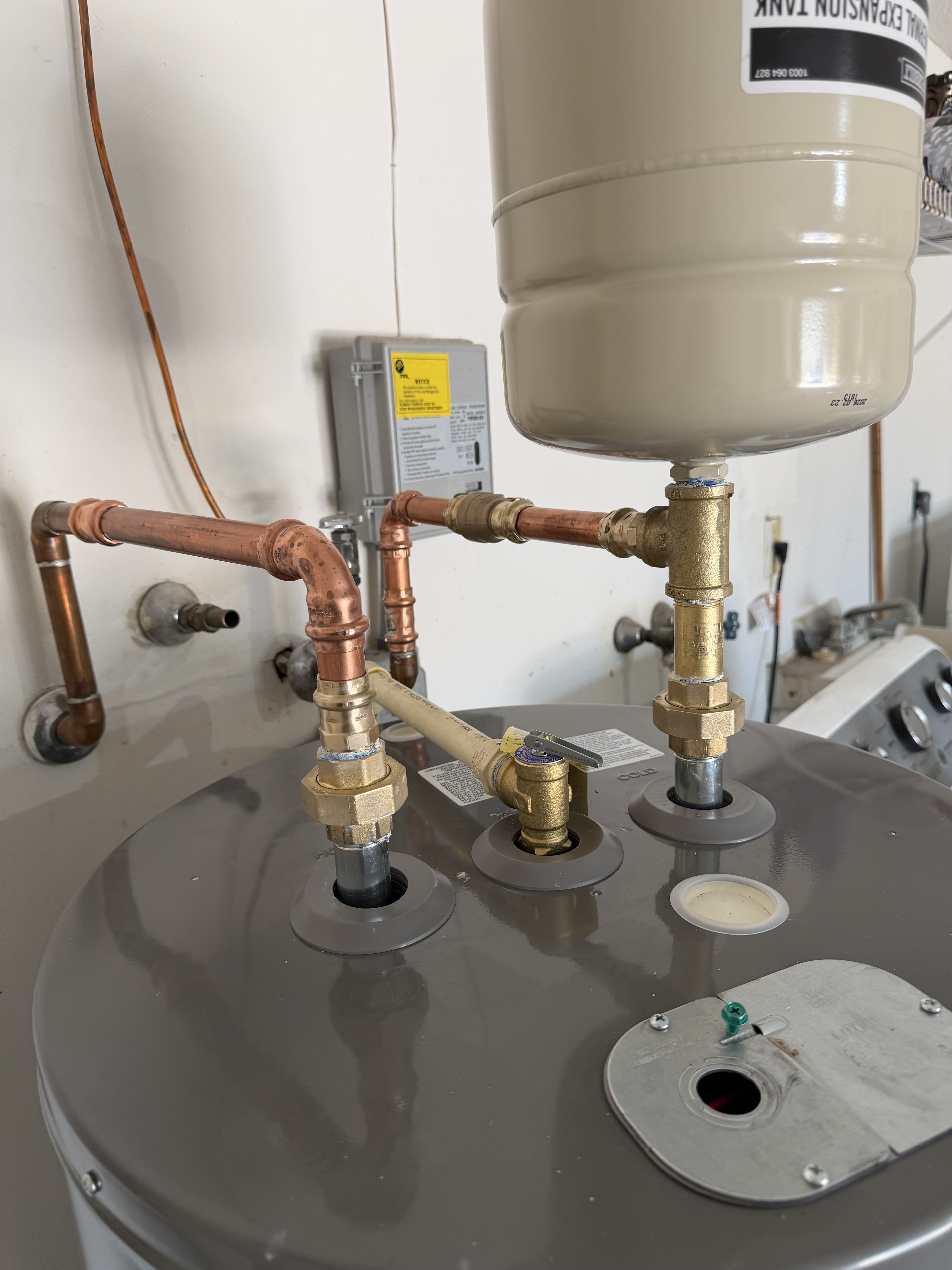
The $17 brass fittings most installers skip: dielectric unions protecting this Venice, FL water heater from galvanic corrosion. Plumbing Detectives LLC, CFC1434139
Plumbing Detectives LLC, a licensed plumbing contractor (CFC1434139) serving Venice, Sarasota, Englewood, North Port, and Nokomis, today published a free guide exposing the most common water heater installation mistake in Southwest Florida: connecting copper pipe directly to the galvanized steel nipples on top of the tank, with no brass fitting in between.
"I've opened up hundreds of these installations, and it's the same story every time," said Mike Reynolds, owner of Plumbing Detectives and a licensed master plumber. "Copper threaded straight onto galvanized steel. No brass transition. No buffer. That connection is losing from the moment the water gets turned back on — the homeowner just doesn't get to see the score until the floor is wet."
A Battery Where Your Plumbing Should Be
The failure has a name: galvanic corrosion. Copper and galvanized steel are dissimilar metals, and when they touch with water flowing between them, they don't just sit there — they form a working battery. A real one, generating real voltage. And in that matchup, the galvanized nipple is the designated loser. Its protective zinc coating sacrifices itself first, dissolving into the water atom by atom. When the zinc is gone, the bare steel underneath corrodes even faster. The joint eats itself from the inside — no stain, no drip, no warning — until a seep becomes a leak and a leak becomes a soaked subfloor.
The heater never had a chance. It was beaten at installation.
The Fix: Brass in the Middle, Every Time
The guide walks through the correct installation — the one Plumbing Detectives runs on every water heater it touches. The principle is simple: copper never touches galvanized steel. Brass stands between them, because brass sits nearly halfway between the two metals electrochemically, cutting the corrosive driving force at the connection by roughly 86 percent.
In practice, that looks like this. On both the hot and cold sides, a brass female union threads directly onto the tank's galvanized nipple — brass-to-galvanized is a safe pairing. From the union, the line transitions to a copper male adapter, and only then does copper pipe carry on into the house. On the cold side, the sequence also picks up a brass tee feeding an expansion tank — required by Florida code on virtually every home on public water — plus a copper ball valve so the heater has its own shutoff.
And those brass unions aren't just corrosion protection. A union comes apart with a wrench. When the tank reaches the end of its life, the next plumber disconnects it in minutes instead of cutting pipe. "A 3/4-inch brass union runs about seventeen bucks at the hardware store," Reynolds said. "That's the price of doing it right. Every installer should be using them on both sides. Most don't use them at all. That tells you something about who's thinking past the day of the install."
How to Check Your Own Tank in Two Minutes
Homeowners don't need a license to spot trouble. Look at the two pipes coming out of the top of the water heater. If copper pipe or a copper fitting connects directly to the short steel nipples at the tank — no brass in between — galvanic corrosion is already underway. White or greenish crust around the threads, rust streaks below the connection, or dampness on top of the tank are the late innings. The full guide, available on the Plumbing Detectives website, covers the inspection step by step.
The repair is typically a 2- to 3-hour job — removing the copper fittings and rebuilding the connections with proper brass transitions — and costs a fraction of a flooded floor or a water heater replacement five or six years ahead of schedule.
Homeowners in Venice, Sarasota, Englewood, North Port, and Nokomis who want a water heater installation inspected, corrected, or replaced can reach Plumbing Detectives at 239-388-3631 or plumbingdetectivesfl.com.
The full guide is available at: https://plumbingdetectivesfl.com/water-heater-galvanic-corrosion-copper-galvanized-connections/
About Plumbing Detectives LLC
Plumbing Detectives LLC is a licensed plumbing contractor (CFC1434139) serving Venice, Sarasota, Englewood, North Port, Nokomis, and the surrounding Southwest Florida area. Owner Mike Reynolds and his team specialize in water heater installation and replacement, whole-home repiping, and plumbing diagnostics for residential and light commercial properties. Every installation is done to code and built to last.
Phone: 239-388-3631 | plumbingdetectivesfl.com | License: CFC1434139
Press Inquiries
Michael Reynolds
mike [at] plumbingdetectivesfl.com
2393883631
https://plumbingdetectivesfl.com
312 E Venice Ave