FALLS CHURCH, Va., April 13, 2026 (GLOBE NEWSWIRE) -- Northrop Grumman and the U.S. Air Force are achieving substantial progress across the Sentinel program, advancing toward first flight in 2027 and initial capability in the early 2030s. From missile testing and infrastructure prototyping to supply chain readiness, Sentinel is accelerating development enabled by a transformed acquisition approach.
In close partnership with the U.S. Air Force, Northrop Grumman is focused on achieving the earliest possible initial capability for the Sentinel weapon system. With rigorous systems engineering and an incremental approach to development and fielding, the Sentinel team is advancing capability through a series of phases that prioritize speed to make the system operational as quickly as possible. This allows testing and validation to occur earlier, lessons learned to be applied in real time and capability to be fielded faster while maintaining rigorous performance standards.
Sentinel is a new system to replace the aged ground-based leg of the nuclear triad, spanning more than 32,000 square miles across five states. With elements of the updated acquisition approach already in motion, the Sentinel government-industry team has made significant progress testing critical hardware, fortifying the supply chain—a massive industrial base of more than 500 partners—and augmenting the nationwide workforce of more than 10,000 dedicated professionals.
Over the past five years, Northrop Grumman has invested $13.5 billion in infrastructure and R&D for critical national security programs, including $2 billion dedicated to solid rocket motor capacity and capabilities that benefit Sentinel’s ability to accelerate and scale production. The Sentinel program continues to gain momentum—and Northrop Grumman is dedicated to delivering warfighter capabilities that balance breakthrough technology, affordability and speed.
“The Sentinel program exemplifies what’s possible when a bold acquisition approach meets relentless innovation,” said Sarah Willoughby, vice president and general manager, strategic deterrent systems, Northrop Grumman. “Our dedicated workforce and extensive partner network are united by a common purpose to field the Sentinel weapon system with speed and scale while delivering enhanced capability to the U.S. Air Force.”
From Digital Designs to Verified Hardware
Leveraging lessons learned from the B-21 Raider, the LGM-35A Sentinel intercontinental ballistic missile (ICBM) was designed in a digital ecosystem—increasing speed, efficiency and collaboration. The new three-stage booster design bolsters accuracy and flexibility for no-fail ICBM missions. Sentinel’s solid rocket motors are made of strong and corrosion-resistant composite materials which are 70% lighter than Minuteman III’s—increasing payload capacity and range.
The missile has already moved from digital designs into early prototyping, assembly and testing, paving the way for the first flight test and initial capability. Examples of the missile’s progress include:
- Every propulsive element of the Sentinel missile has been prototyped and tested. Northrop Grumman has assembled the first three-stage Sentinel booster, verifying design, processes and technologies, and solid rocket motors for the first five flight tests are already in production.
- Two Interstage Separation Tests were conducted to demonstrate the ability of the missile to cleanly separate the spent solid rocket motor stages one and two from the rest of the vehicle. A shroud fly-off test tested and validated the design of the shroud, which is a protective cover for the missile’s payload.
- The Guidance and Control Hardware—the brains of the missile—was stress tested through an initial mass model sled test which exposed the Navigation Inertial Measurement System (NIMS) hardware to flight-like conditions to evaluate performance. Passing this test means the hardware will survive the environmental stresses induced during the missile’s flight, critical for Sentinel’s accuracy and overall mission success.
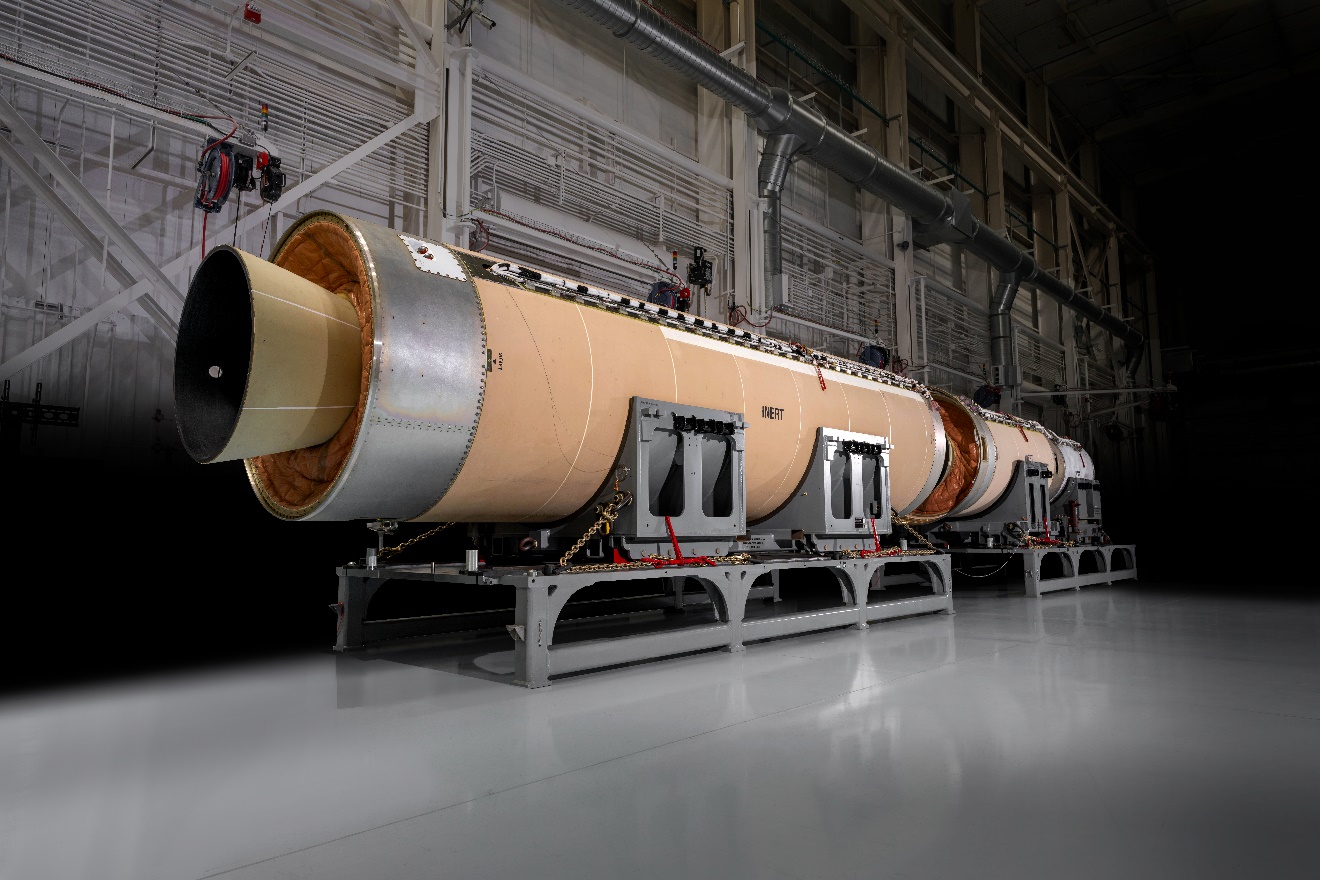
First fully assembled Sentinel ground test booster, including stages-one, -two and -three solid rocket motors and both interstage mechanisms. (Photo Credit: Northrop Grumman)
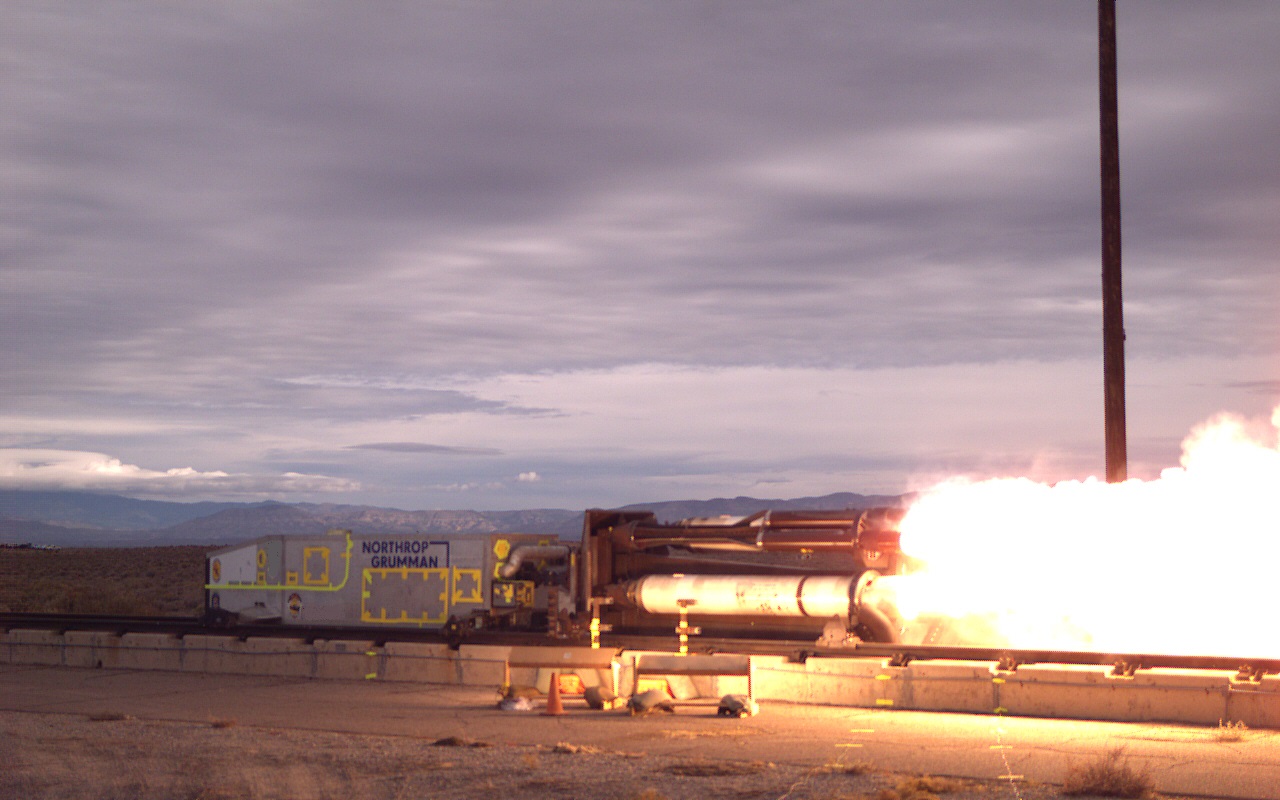
Sentinel’s Guidance and Control (G&C) hardware has passed an initial mass model sled test conducted by Northrop Grumman Corporation and the U.S. Air Force. (Photo Credit: U.S. Air Force)
Sentinel replaces existing launch silos with a new modular silo design and supporting infrastructure. The new architecture saves costs and improves performance and maintenance—positioning Sentinel to meet today’s requirements while staying adaptable to meet future needs. Alongside the missile development, the Sentinel program has seen significant progress in maturing other crucial elements of the complex weapon system.
- Northrop Grumman broke ground on a prototype of the Sentinel Launch Silo tube, which will test and validate the structural design and construction approach. The new design is a key enabler in accelerated fielding of the system and is expected to control costs for the program when compared to refurbishing Minuteman III’s silos.
- Sentinel’s mission-critical transport systems were verified through a cross-country road test, ensuring high-value assets will be protected during transit.
- The Launch Support System (LSS)—a digital command and control infrastructure—completed its critical design review, paving the way for system build, test and qualification phases.
Proving Today, Building for What’s Next
The Sentinel weapon system is one of the most rigorous and thoroughly tested defense programs in modern history—ensuring each component meets requirements and is resilient for the warfighter from initial capability through 2075. This program momentum will become even more visible in 2027 as digital designs translate into critical facilities, infrastructure and the first Sentinel flight test. Northrop Grumman is partnering with the U.S. Air Force and industry teammates to support and inform local communities at the missile wings, collecting critical data and insights that lay the foundation for successful construction, fielding and future operations.
Northrop Grumman and its partners will continue prototyping and testing the cornerstones of the new system—including the missile, Launch Silo and Launch Center—on the path to certifying each design, flight testing and eventually reaching initial capability. Together, Northrop Grumman and the U.S. Air Force will deliver the world’s most powerful ICBM system, ensuring strategic deterrence that withstands the test of time—with unmatched reliability and undisputed credibility.
Contact: John Dorrian
571-540-5841
john.dorrian@ngc.com
Photos accompanying this announcement are available at
https://www.globenewswire.com/NewsRoom/AttachmentNg/19135f2d-6cac-4980-a8b6-bb5d891b563b
https://www.globenewswire.com/NewsRoom/AttachmentNg/74c6b0c9-c8b3-4fc5-baaf-03c508ff670f